-1.svg)
Blog
PCI Compliance Training vs. PCI Descoping: What’s the Difference?
10 Sep 2026
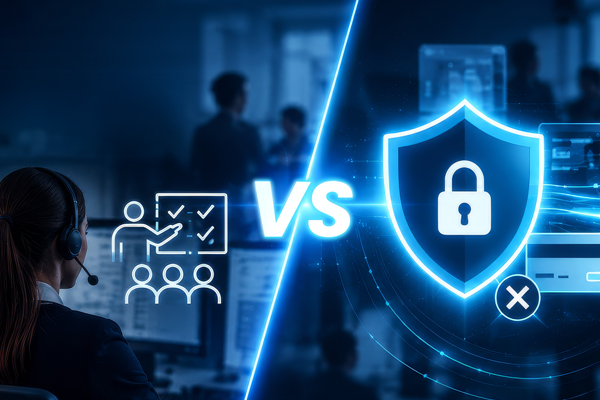
When it comes to PCI DSS compliance, training your employees and reducing your PCI scope are both important parts of protecting payment card data, but they solve two very different problems.
PCI compliance training helps your team understand how to handle sensitive information appropriately. PCI descoping goes a step further by reducing the opportunities for them to come into contact with cardholder data in the first place.
When it comes down to it, the most effective approach isn’t choosing between the two; it’s using them together.
What is PCI descoping?
PCI descoping is about reducing the people, processes, and technology that come into contact with cardholder data. By doing this, you reduce the scope of your PCI DSS compliance obligations.
Imagine you have a contact center and you take payments over the phone. Customers verbally give their card data to your agents to complete a transaction. Without the right technology in place, that sensitive information can potentially enter the contact center environment through your agent, call recording systems, desktop applications, or other infrastructure.
A PCI descoping solution changes that.
Customers can enter or say their payment information securely without exposing the card details to your agent or your contact center environment. The agent can remain engaged on the line with the customer and guide them through the transaction, but they don't need to see, hear, or handle the sensitive payment data.
By keeping cardholder data out of your environment, you can reduce both your PCI DSS scope and the potential points of exposure you need to manage.
What is PCI compliance training?
PCI compliance training focuses on the people side of payment security.
Employees need to understand their responsibilities, follow approved processes, and recognize behaviors that could put sensitive information at risk. Training helps establish that awareness and reinforces the role every employee plays in maintaining a secure environment.
Implementing PCI descoping technology doesn't mean that training suddenly becomes unnecessary.
Even when employees no longer directly handle cardholder data, they still need to understand why security controls exist, how to follow the correct processes, and what to do if something doesn't look right.
Why PCI descoping and training work better together
Training is essential, but organizations shouldn't have to rely on training alone to protect payment information.
People make mistakes and processes aren't always followed perfectly. Even well-trained employees can accidentally expose sensitive information.
PCI descoping adds another layer of protection by using technology to remove cardholder data from areas of the contact center where it doesn't need to be.
Think of it this way: PCI descoping reduces exposure. PCI training reinforces secure behavior.
Together, they create a stronger approach to payment security.
What does this mean for your contact center?
A strong PCI DSS strategy should look at both technology and people.
Start by understanding where cardholder data enters your environment, which systems and employees are exposed to it, and where technology can remove unnecessary exposure. Then make sure your employees have the training they need, to understand and follow the security processes that remain.
PCI descoping and PCI training aren't alternatives to each other; they work hand in hand. By combining technology that minimizes exposure to cardholder data with ongoing employee education, you can reduce risk, simplify PCI DSS compliance, and create a more secure payment environment.
At Eckoh, we help organizations secure payment interactions while reducing the amount of sensitive payment data entering their contact center environments. Want to see what PCI descoping could look like in your contact center? Request a demo to learn more.