MiFID II Explained

The Markets in Financial Instruments Directive now impacts a wider range of firms and people

Shield
Improves transparency and customer protection in financial markets
Shield
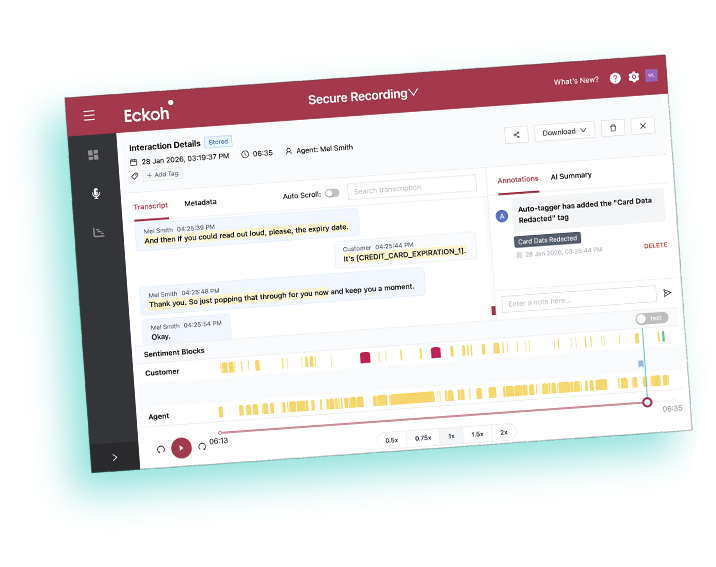
Requires recording and secure storage of financial customer communications
Overview

What does MiFID II stand for?

MiFID II(The Markets in Financial Instruments Directive) was driven by a need for a more robust set of measures to strengthen financial stability, aimed at ensuring maximum transparency in markets, increasing protection for investors through stronger due diligence and disclosures, and reinforcing the supervisory power of the regulators.

The revised Markets in Financial Instruments Directive (MiFID II), implemented in January 2018, aims to ensure maximum transparency in markets. It will mean a fundamental review of business processes for a wider range of firms and people within the financial advisor community.

MiFIDII
ContactCenterAgent

Changes for contact centers

The recording of conversations between firms and their clients is a major area of change in the new directive, aimed at both reducing the risk of fraudulent activity by members of the firm and ensuring sound advice is given.

The Financial Conduct Authority (FCA) has mandated the recording of both fixed line and mobile calls since 2011 for traders, and the EU General Data Protection Regulation requires firms to pay special attention to the recording of conversations within the context of data privacy.

While some will look at the updated requirements for recording under MiFID II as an administrative burden, many see it as a valuable opportunity to take decisive action that will not only cement their firm’s position of trust in the market but help ensure competitive advantage in the years to come.

MiFID II and Call Recording

  • MiFID II’s wording is very clear - anyone involved in giving advice that may lead to a trade or investment must not only record their calls, but securely archive them for up to five years, and ensure compliance oversight of these recordings.
  • Both the number of firms and the number of staff within the firm that need to record conversations will increase by around a factor of 10.
  • MiFID II now covers the premises in which the calls take place as well as companies and people.
  • MiFID II will require all “communications that are intended to lead to a transaction” to be recorded and retained.
  • Recordings will need to be stored for a minimum of five years under MiFID II.
  • Maintaining records of the highest voice quality is increasingly important since market abuse is one of the most difficult offenses to investigate and prosecute.
  • Firms need to proactively review the records of all transactions and orders subject to these requirements, including relevant conversations, to monitor compliance with the MiFID II requirements.
ServiceHero-CallRecording2

Other areas of compliance

At Eckoh, compliance is essential for organisations to engage with customers across every channel. Whether supporting PCI DSS, GDPR, or MiFID II requirements, we help ensure sensitive data is handled responsibly throughout every customer journey.


PCI DSS

If you take card payments, you need to be PCI compliant to protect your customers and business reputation.

GDPR

Contact centers are more likely to be exposed to, handle, use or store personal data of your customers. That means that GDPR will apply.